EasySep™ Human B Cell Isolation Kit

Immunomagnetic negative isolation of untouched human B cells

EasySep™ Human B Cell Isolation Kit

Immunomagnetic negative isolation of untouched human B cells
From: 980 USD
Catalog #
(Select a product)
Immunomagnetic negative isolation of untouched human B cells
Add to Wish List

Product Advantages


  • Fast, easy-to-use and column-free

  • Up to 96% purity with high recovery

  • Isolated cells are untouched

What's Included

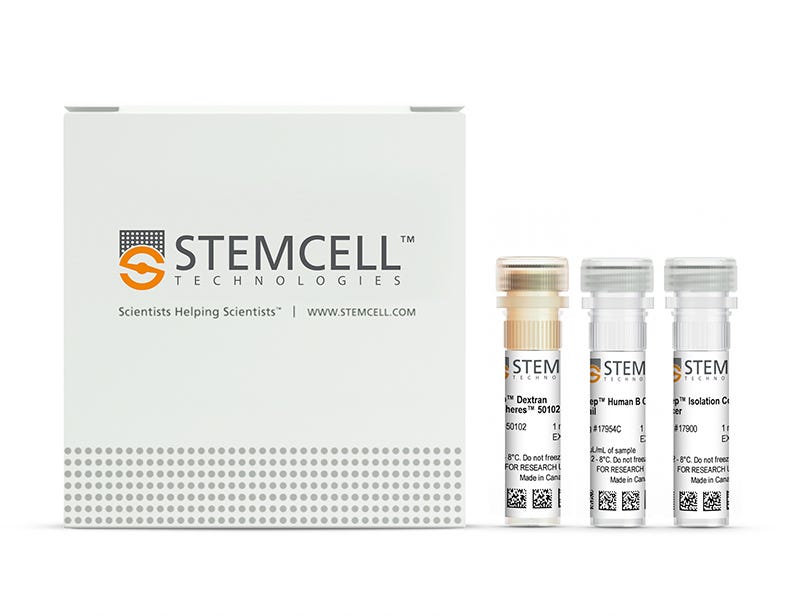
  • EasySep™ Human B Cell Isolation Kit (Catalog #17954)
    • EasySep™ Human B Cell Isolation Cocktail, 1 mL
    • EasySep™ Dextran RapidSpheres™, 1 mL
    • EasySep™ Isolation Cocktail Enhancer, 1 mL
  • EasySep™ Human B Cell Isolation Kit (Catalog #100-0971)
    • EasySep™ Human B Cell Isolation Cocktail, 1 x 10 mL (Catalog #300-0510)
    • EasySep™ Isolation Cocktail Enhancer, 1 x 10 mL (Catalog #300-0511)
    • EasySep™ Dextran RapidSpheres™, 1 x 10 mL (Catalog #300-0380)
  • RoboSep™ Human B Cell Isolation Kit (Catalog #17954RF)
    • EasySep™ Human B Cell Isolation Cocktail, 1 mL
    • EasySep™ Dextran RapidSpheres™, 1 mL
    • EasySep™ Isolation Cocktail Enhancer, 1 mL
    • RoboSep™ Buffer (Catalog #20104)
    • RoboSep™ Filter Tips (Catalog #20125)
Products for Your Protocol
To see all required products for your protocol, please consult the Protocols and Documentation.

Overview

Easily and efficiently isolate highly purified human B cells from fresh or previously frozen human peripheral blood mononuclear cells (PBMCs) or washed leukapheresis samples by immunomagnetic negative selection, with the EasySep™ Human B Cell Isolation Kit. Widely used in published research for more than 20 years, EasySep™ combines the specificity of monoclonal antibodies with the simplicity of a column-free magnetic system.

In this EasySep™ negative selection procedure, unwanted cells are labeled with antibody complexes and magnetic particles. Unwanted cells expressing the following markers are targeted for removal: CD2, CD3, CD14, CD16, CD36, CD43, CD56, CD66b, and GlyA. The magnetically labeled cells are then separated from the untouched desired human B cells by using an EasySep™ magnet and simply pouring or pipetting the desired cells into a new tube. Following magnetic cell isolation in as little as 9 minutes, the desired B cells are ready for downstream applications such as flow cytometry, culture, or DNA/RNA extraction.

This product replaces EasySep™ Human B Cell Enrichment Kit (Catalog #19054) for even faster cell isolations.

For large-scale isolation of human B cells from leukapheresis samples, see the large-format (1x10^10 cells) kit (Catalog #100-0971).

Learn more about how immunomagnetic EasySep™ technology works or how to fully automate immunomagnetic cell isolation with RoboSep™. Alternatively, choose ready-to-use, ethically sourced, primary Human Peripheral Blood B Cells, Fresh isolated with EasySep™ Human B Cell Isolation Kit. Explore additional products optimized for your workflow, including culture media, supplements, antibodies, and more.
Magnet Compatibility
• EasySep™ Magnet (Catalog #18000)
• “The Big Easy” EasySep™ Magnet (Catalog #18001)
• Easy 50 EasySep™ Magnet (Catalog #18002)
• EasyEights™ EasySep™ Magnet (Catalog #18103)
• RoboSep™-S (Catalog #21000)
• Easy 250 EasySep™ Magnet (Catalog #100-0821)
Subtype
Cell Isolation Kits
Cell Type
B Cells, Lymphocytes
Species
Human
Sample Source
Leukapheresis, PBMC
Selection Method
Negative
Application
Cell Isolation
Brand
EasySep, RoboSep
Area of Interest
Chimerism, HLA, Immunology

Data Figures

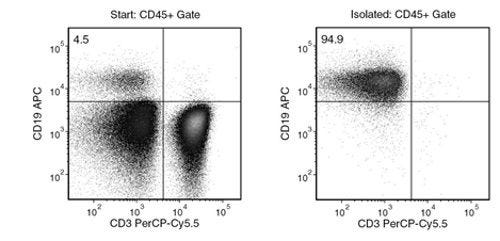
Figure 1. Typical EasySep™ Human B Cell Isolation Profile

Starting with human PBMCs, the B cell (CD3-CD19+) content of the isolated fraction is typically 95.1 ± 1.4% (mean ± SD). In the example above, the final purities of the start and isolated fractions are 4.5% and 94.9%, respectively.

Protocols and Documentation

Find supporting information and directions for use in the Product Information Sheet or explore additional protocols below.

Document Type
Product Name
Catalog #
Lot #
Language
Catalog #
100-0971
Lot #
All
Language
English
Catalog #
17954
Lot #
All
Language
English
Catalog #
17954RF
Lot #
All
Language
English
Document Type
Safety Data Sheet 1
Catalog #
100-0971
Lot #
All
Language
English
Document Type
Safety Data Sheet 2
Catalog #
100-0971
Lot #
All
Language
English
Document Type
Safety Data Sheet 1
Catalog #
17954
Lot #
All
Language
English
Document Type
Safety Data Sheet 2
Catalog #
17954
Lot #
All
Language
English
Document Type
Safety Data Sheet 3
Catalog #
17954
Lot #
All
Language
English
Document Type
Safety Data Sheet 1
Catalog #
17954RF
Lot #
All
Language
English
Document Type
Safety Data Sheet 2
Catalog #
17954RF
Lot #
All
Language
English
Document Type
Safety Data Sheet 3
Catalog #
17954RF
Lot #
All
Language
English
Document Type
Safety Data Sheet 4
Catalog #
17954RF
Lot #
All
Language
English

Applications

This product is designed for use in the following research area(s) as part of the highlighted workflow stage(s). Explore these workflows to learn more about the other products we offer to support each research area.

Resources and Publications

Frequently Asked Questions

Can EasySep™ be used for either positive or negative selection?

Yes. The EasySep™ kits use either a negative selection approach by targeting and removing unwanted cells or a positive selection approach targeting desired cells. Depletion kits are also available for the removal of cells with a specific undesired marker (e.g. GlyA).

How does the separation work?

Magnetic particles are crosslinked to cells using Tetrameric Antibody Complexes (TAC). When placed in the EasySep™ Magnet, labeled cells migrate to the wall of the tube. The unlabeled cells are then poured off into a separate fraction.

Which columns do I use?

The EasySep™ procedure is column-free. That's right - no columns!

How can I analyze the purity of my enriched sample?

The Product Information Sheet provided with each EasySep™ kit contains detailed staining information.

Can EasySep™ separations be automated?

Yes. RoboSep™, the fully automated cell separator, automates all EasySep™ labeling and cell separation steps.

Can EasySep™ be used to isolate rare cells?

Yes. We recommend a cell concentration of 2x10⁸ cells/mL and a minimum working volume of 100 µL. Samples containing 2x10⁷ cells or fewer should be suspended in 100 µL of buffer.

Are the EasySep™ magnetic particles FACS-compatible?

Yes, the EasySep™ particles are flow cytometry-compatible, as they are very uniform in size and about 5000X smaller than other commercially available magnetic beads used with column-free systems.

Can the EasySep™ magnetic particles be removed after enrichment?

No, but due to the small size of these particles, they will not interfere with downstream applications.

Can I alter the separation time in the magnet?

Yes; however, this may impact the kit's performance. The provided EasySep™ protocols have already been optimized to balance purity, recovery and time spent on the isolation.

For positive selection, can I perform more than 3 separations to increase purity?

Yes, the purity of targeted cells will increase with additional rounds of separations; however, cell recovery will decrease.

How does the binding of the EasySep™ magnetic particle affect the cells? is the function of positively selected cells altered by the bound particles?

Hundreds of publications have used cells selected with EasySep™ positive selection kits for functional studies. Our in-house experiments also confirm that selected cells are not functionally altered by the EasySep™ magnetic particles.

If particle binding is a key concern, we offer two options for negative selection. The EasySep™ negative selection kits can isolate untouched cells with comparable purities, while RosetteSep™ can isolate untouched cells directly from whole blood without using particles or magnets.

Publications (42)

Temporal and transcriptional programming of effector memory B cells shapes vaccine platform-dependent humoral immunity. A. Nellore et al. iScience 2026 Oct

Abstract

This study investigates how influenza vaccine platform shapes the memory B cell responses that underlie durable antibody protection. Using fluorescent hemagglutinin (HA) probes, the authors compared HA-specific IgD-negative B cells in adults who received either live attenuated influenza vaccine (LAIV) or inactivated influenza vaccine (IIV). Both platforms induced circulating T-bet+ HA+ B cells with similar phenotypic features, but their relationship to antibody outcomes diverged sharply: while these cells track with durable IgG responses after IIV, only early (day 7-14) T-bet+ HA+ B cell frequencies predicted durable IgA responses after LAIV. Single-cell transcriptional profiling further revealed that LAIV and IIV elicit distinct effector-memory B cell states, including an LAIV-enriched, terminally differentiated TBX21/ZEB2-high population with limited plasmablast recall potential. Together, these findings show that influenza vaccination drives platform-dependent diversification of HA-specific B cell states, highlighting the need for vaccine-platform-specific correlates of immune protection.
Cancers modulate processing and presentation of p53 neoantigens to evade T cell detection. K. Haratani et al. Immunity 2026 Oct

Abstract

TP53 mutations occur early in malignant transformation as truncal events in tumor evolution and are therefore generally present in all descendant tumor cells, creating an immunological vulnerability. Here, we examined the immunogenicity and antigenicity of p53 neoantigens emerging from these truncal mutations. Comprehensive immunopeptidomics revealed that hotspot mutations in human tumors preferentially localize to p53 regions resistant to antigen processing, thereby avoiding display altogether. Moreover, for neoantigens presentable by HLA-A∗02:01 or HLA-B∗07:02 and structurally divergent from corresponding wild-type p53 peptide-HLA complexes, clinical tumors commonly lacked the relevant presenting HLA allele. Tumor cells further resisted T cell killing through increased activity of the aminopeptidase ERAP1, preventing display of high-affinity HLA-A∗02:01 complexes containing an immunogenic p53I195F-derived 11-mer, or by expressing low-affinity HLA-A∗02:01 complexes containing a p53R175H-derived 9-mer with poor antigenicity despite high-quality human TCRs. These findings define mechanisms by which tumors restrict targetable truncal neoantigen display and suggest immunopeptidome shift strategies to circumvent immune escape.
TLR9 Agonists Potentiate Adoptive T-cell Therapy in Cancer through a B-cell-CD2 Costimulatory Axis. A. Ruffin et al. Cancer research 2026 Oct

Abstract

UNLABELLED: Adoptive T-cell transfer (ACT) therapy offers curative potential for some patients with cancer. Toll-like receptor (TLR) agonists improve the efficacy of ACT therapy, and elucidating the underlying mechanism of potency could help determine the best way to maximize the benefits of TLR agonists. In this study, we identified an innate-adaptive circuit in which TLR9-activated B cells augment CD8+ T-cell fitness and antitumor activity through CD2-dependent costimulation. Among multiple TLR agonists tested, class B CpG uniquely programmed murine and human CD8+ T cells for superior effector differentiation, metabolic fitness, and antitumor control. Disruption of CD2 signaling blunted the benefits of TLR9 agonism, including impaired glycolytic capacity and reduced tumor control. Independently, blocking other costimulatory molecules, such as CD86, CD80, CD28, or inducible T-cell costimulator (ICOS), did not impair the antitumor activity of CpG-conditioned T cells. Gain-of-function experiments revealed that CD2 stimulation recapitulated the effect of TLR9 agonism, bolstering the effector function of tumor-infiltrating lymphocytes and chimeric antigen receptor (CAR) T cells. Consistent with these findings, elevated CD2 expression in human tumors correlated with improved overall survival across multiple patient cohorts with cancer, underscoring the clinical importance of this signaling cue. Together, these data uncover a noncanonical B-cell-CD2 costimulation axis through which TLR9 agonists potentiate ACT, revealing a targetable pathway to overcome resistance to cell therapy in solid tumors. SIGNIFICANCE: B cells activated with TLR9 agonist cross-talk with CD8+ T cells via CD2, which enhances their fitness, cytotoxic function, and antitumor activity against solid tumors.