PneumaCult™-Ex Plus Medium

Serum- and BPE-free medium for expansion of primary human airway epithelial cells
Want even better HAEC expansion rates and differentiation potential? Use PneumaCult™-NGEx Medium, our most advanced and optimized expansion medium, to achieve up to 250x more cells in just three weeks.

PneumaCult™-Ex Plus Medium

Serum- and BPE-free medium for expansion of primary human airway epithelial cells

From: 253 USD
Catalog #
(Select a product)
Serum- and BPE-free medium for expansion of primary human airway epithelial cells
Add to Wish List

Product Advantages


  • A defined, serum- and BPE-free cell culture medium that delivers consistent performance

  • PneumaCult™-Ex Plus Medium supports more cell expansion at each passage compared to other commercially available expansion media

  • When used together with PneumaCult™-ALI Medium or PneumaCult™-ALI-S Medium, PneumaCult™-Ex Plus Medium supports better ALI differentiation potential even after extended passaging compared to other commercially available expansion media

What's Included

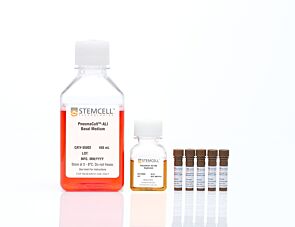
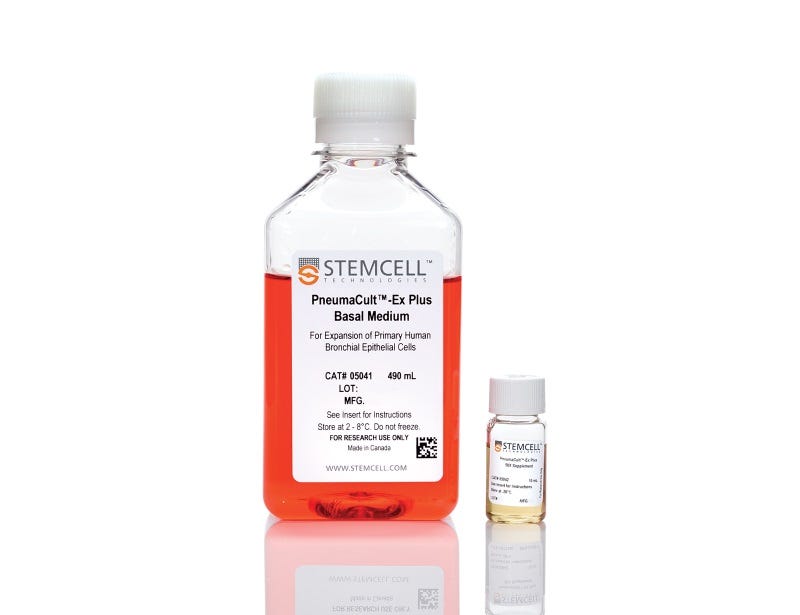
  • PneumaCult™-Ex Plus Basal Medium, 490 mL
  • PneumaCult™-Ex Plus 50X Supplement, 10 mL
Products for Your Protocol
To see all required products for your protocol, please consult the Protocols and Documentation.

Overview

PneumaCult™-Ex Plus Medium is a defined, serum- and BPE-free cell culture medium that supports more expansion of primary human airway and nasal epithelial cells at each passage, compared to other commercially available expansion media. This medium also supports at least two additional passages of cell expansion with better differentiation potential, defined as the ability to form a pseudostratified mucociliary epithelium at the air-liquid interface (ALI) using PneumaCult™-ALI Medium (Catalog #05001) or a cuboidal epithelium using PneumaCult™-ALI-S Medium (Catalog #05050).

PneumaCult™-Ex Plus and either PneumaCult™-ALI or PneumaCult™-ALI-S constitute a fully integrated BPE-free culture system for in vitro human airway modeling. This robust and defined system is a valuable tool for basic respiratory research, toxicity studies, and drug development.

Learn how to culture human airway epithelial cells at the ALI in our On-Demand Pulmonary Course or browse our Frequently Asked Questions (FAQs) about the ALI culture workflow using PneumaCult™.

For information about introductory offers to try PneumaCult™ in your lab, fill out this form.
Subtype
Specialized Media
Cell Type
Airway Cells
Species
Human
Application
Cell Culture, Expansion, Maintenance
Brand
PneumaCult
Area of Interest
Epithelial Cell Biology
Formulation Category
Serum-Free

More Information

More Information
Safety Statement

CA WARNING: This product can expose you to Progesterone which is known to the State of California to cause cancer. For more information go to www.P65Warnings.ca.gov

Data Figures

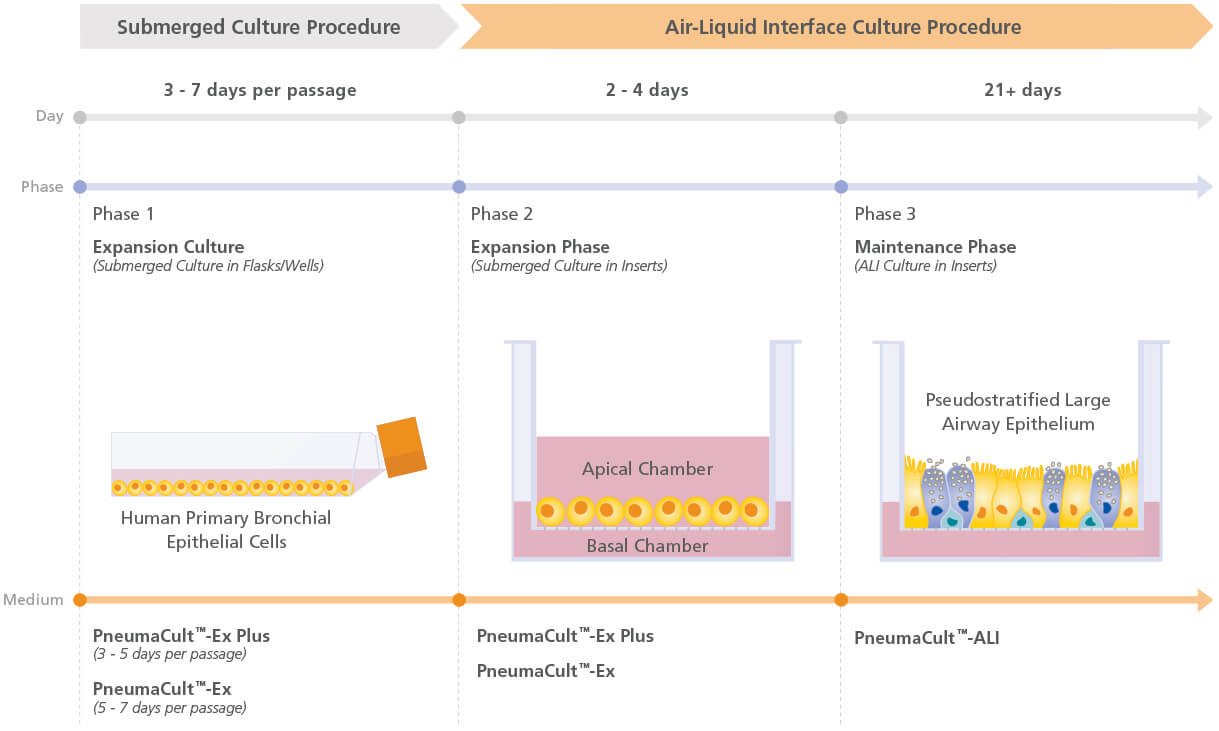
Figure 1. Overview of the PneumaCult™ culture system

Expansion of human bronchial epithelial cells (HBECs) in submerged culture is performed with PneumaCult™-Ex Plus or PneumaCult™-Ex. During the early “Expansion Phase” of the air-liquid interface (ALI) culture procedure, PneumaCult™-Ex Plus or PneumaCult™-Ex is applied to the apical and basal chambers. Upon reaching confluence, the culture is air-lifted by removing the culture medium from both chambers, and adding PneumaCult™-ALI to the basal chamber only. Differentiation into a pseudostratified mucociliary epithelium is obtained following 21-28 days of incubation and can be maintained for more than one year.

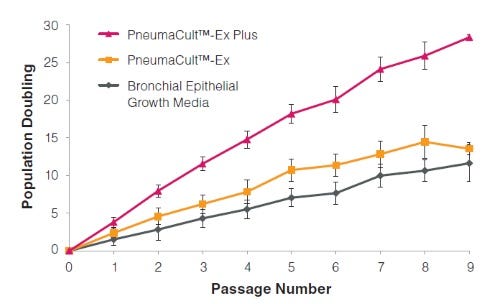
Figure 2. HBECs cultured in PneumaCult™-Ex Plus have a faster expansion rate compared to those cultured in PneumaCult™-Ex and Bronchial Epithelial Growth Media

Commercially available, cryopreserved P1 HBECs were seeded into PneumaCult™-Ex Plus, PneumaCult™-Ex, or Bronchial Epithelial Growth Media. Cells cultured in PneumaCult™-Ex Plus have a significantly higher proliferation rate over 9 passages compared to those maintained in either control medium (n=6).

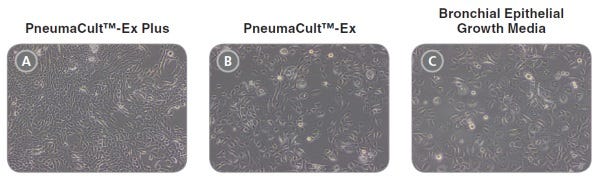
Figure 3. Representative morphology of HBECs

Representative live culture images for P4 HBECs cultured in PneumaCult™-Ex Plus, PneumaCult™-Ex, or Bronchial Epithelial Growth Media. Cells cultured in PneumaCult™-Ex Plus (A) are smaller and more tightly packed than those cultured in PneumaCult™-Ex (B) or Bronchial Epithelial Growth Media (C). All images were taken using a 10X objective.

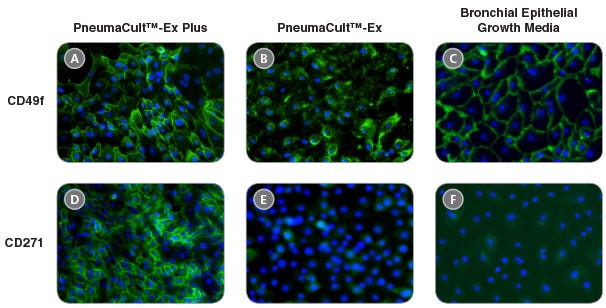
Figure 4. HBECs cultured in PneumaCult™-Ex Plus maintain widespread expression of the basal cell markers CD49f and CD271

Immunocytochemistry detection of basal cell markers - CD49f (A, B, and C) and CD271 (D, E, and F) - for P4 HBECs cultured in PneumaCult™-Ex Plus (A and D), PneumaCult™-Ex (B and E), and Bronchial Epithelial Growth Media (C and F). All images were taken using a 10X objective.

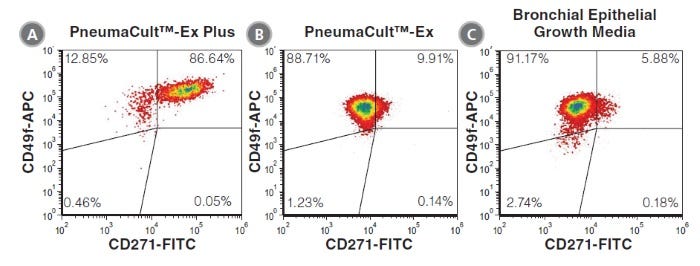
Figure 5. HBECs cultured in PneumaCult™-Ex Plus have a higher proportion of CD271+CD49f+ cells

P4 HBECs cultured in PneumaCult™-Ex Plus (A), PneumaCult™-Ex (B), and Bronchial Epithelial Growth Media (C) were characterized by flow cytometry to detect expression of the basal cell markers CD49f and CD271. HBECs cultured in PneumaCult™-Ex Plus (A) have a higher proportion of cells coexpressing CD49f and CD271, compared to those cultured in PneumaCult™-Ex (B) and Bronchial Epithelial Growth Media (C).

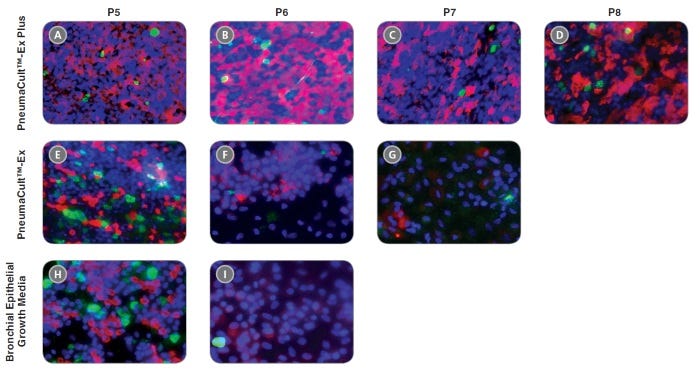
Figure 6. HBECs cultured in PneumaCult™-Ex Plus differentiate into a pseudostratified mucociliary epithelium at later passages with the use of PneumaCult™-ALI

P4 HBECs were seeded and passaged using PneumaCult™-Ex Plus, PneumaCult™-Ex, or Bronchial Epithelial Growth Media, followed by ALI differentiation at each passage (P5-8) with the use of PneumaCult™-ALI. The ALI cultures at 28 days post air-lift were fixed and stained with antibodies for cilia marker AC-tubulin (red) and the goblet cell marker Muc5AC (green). The nuclei are counterstained with DAPI (blue). All images were taken using a 20X objective.

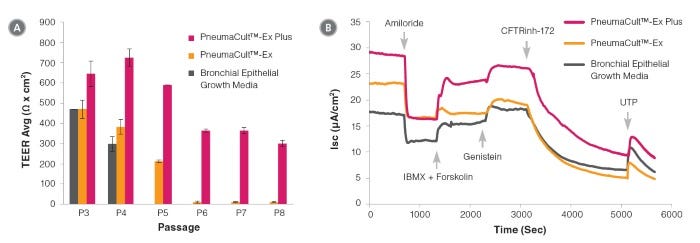
Figure 7. Electrophysiological characterization of differentiated HBECs (P4) that were expanded in PneumaCult™-Ex Plus, PneumaCult™-Ex, and Bronchial Epithelial Growth Media

Transepithelial electrical resistance (TEER) (A) and representative characterization of the ion channel activities (B) for ALI cultures at 28 days post air-lift using HBECs expanded in PneumaCult™-Ex Plus, PneumaCult™-Ex, or Bronchial Epithelial Growth Media. Amiloride: ENaC inhibitor. IBMX and Forskolin: CFTR activators. Genistein: CFTR potentiator. CFTRinh-172: CFTR inhibitor. UTP: Calciumactivated Chloride channels (CaCCs) activator. All ALI differentiation cultures were performed using PneumaCult™-ALI.

Protocols and Documentation

Find supporting information and directions for use in the Product Information Sheet or explore additional protocols below.

Document Type
Product Name
Catalog #
Lot #
Language
Catalog #
05040
Lot #
All
Language
English
Document Type
Safety Data Sheet 1
Catalog #
05040
Lot #
All
Language
English
Document Type
Safety Data Sheet 2
Catalog #
05040
Lot #
All
Language
English

Applications

This product is designed for use in the following research area(s) as part of the highlighted workflow stage(s). Explore these workflows to learn more about the other products we offer to support each research area.

Resources and Publications

Publications (38)

Evolutionary loss of an antibiotic efflux pump increases Pseudomonas aeruginosa quorum sensing mediated virulence in vivo S. E. Fernandes et al. Nature Communications 2025 Sep

Abstract

Antibiotic resistance is a threat to human health, yet recent work highlights how loss of resistance may drive pathogenesis in some bacteria. In two recent studies, we found that β-lactam antibiotics and nutrient stresses faced during infection selected for genetic inactivation of the Pseudomonas aeruginosa antibiotic efflux pump mexEFoprN . Unexpectedly, efflux pump mutations increased P. aeruginosa virulence during infection; however, neither the prevalence of mexEFoprN inactivating mutations in real human infections, nor the mechanisms driving increased virulence of efflux pump mutants are known. We hypothesized that human infection would select for virulence enhancing mutations. Using genome sequencing of clinical isolates, we show that mexEFoprN efflux pump inactivating mutations are enriched in P. aeruginosa isolates from cystic fibrosis infections relative to isolates from acute respiratory infections. Combining RNA-seq, metabolomics, genetic approaches, and infection models we show that efflux pump mutants have elevated quorum sensing driven expression of elastase and rhamnolipids which increase P. aeruginosa virulence during acute and chronic infections. Restoration of the efflux pump in a representative respiratory isolate and the notorious cystic fibrosis Liverpool epidemic strain reduced their virulence. These findings suggest that mutations inactivating antibiotic resistance mechanisms could lead to greater patient mortality and morbidity. Subject terms: Antimicrobial resistance, Pathogens, Bacteriology, Molecular evolution
Inhibition of LOXL2 Suppresses Nasal Mucosal Inflammation and Remodeling in Allergic Rhinitis Z. Li et al. Journal of Asthma and Allergy 2025 Sep

Abstract

Tissue remodeling is a key feature of allergic rhinitis (AR), but its underlying molecular mechanisms remain unclear. Lysyl oxidase-like 2 (LOXL2), a regulator of tissue remodeling, has not been studied in AR. Proteomic analysis was performed on nasal mucosal tissues from 8 AR patients and 8 healthy controls (HCs) to identify differentially expressed proteins (DEPs). The top three upregulated DEPs and their association with tissue remodeling markers were validated by immunofluorescence, Western blot, and RT-qPCR in an independent cohort of 30 AR patients and 30 HCs. In vitro, human nasal epithelial cells (HNECs) were treated with IL-4, and the effects of candidate protein inhibitors on remodeling were assessed. An AR mouse model was used to evaluate the impact of these inhibitors on nasal inflammation and remodeling. Proteomic analysis revealed a disease-specific protein expression profile in the nasal mucosa of AR patients, with the top three upregulated proteins being LOXL2, TGF-β1, and TIRAP. Tissue validation showed that LOXL2 was significantly upregulated in the nasal mucosa of AR patients compared to HCs and was significantly correlated with EMT markers (TGF-β1, α-SMA, and E-cadherin). In vitro, IL-4 stimulation significantly upregulated LOXL2, TGF-β1, and α-SMA, while downregulating E-cadherin in a dose-dependent manner in human nasal epithelial cells. These effects were reversed by inhibition of LOXL2. Further investigations demonstrated that LOXL2 promotes tissue remodeling through activation of the TGF-β1/Smad signaling pathway. In the AR mouse model, LOXL2 inhibitors significantly reduced nasal mucosal inflammation and tissue remodeling. Our proteomic analysis suggests that LOXL2 may be involved in the pathological remodeling processes of AR, potentially through modulation of the TGF-β1/Smad signaling pathway. These findings provide preliminary evidence that LOXL2 could serve as a candidate biomarker and a possible therapeutic target in AR, warranting further investigation.
Bat organoids reveal antiviral responses at epithelial surfaces M. J. Kellner et al. Nature Immunology 2025 May

Abstract

Bats can host viruses of pandemic concern without developing disease. The mechanisms underlying their exceptional resilience to viral infections are largely unresolved, necessitating the development of physiologically relevant and genetically tractable research models. Here, we developed respiratory and intestinal organoids that recapitulated the cellular diversity of the in vivo epithelium present in Rousettus aegyptiacus , the natural reservoir for the highly pathogenic Marburg virus (MARV). In contrast to human counterparts, bat organoids and mucosal tissue exhibited elevated constitutive expression of innate immune effectors, including type I interferon-ε (IFNε) and IFN-stimulated genes (ISGs). Upon infection with diverse zoonotic viruses, including MARV, bat organoids strongly induced type I and III IFN responses, which conferred robust antiviral protection. Type III IFNλ3 additionally displayed virus-independent self-amplification, acting as an ISG to enhance antiviral immunity. Our organoid platform reveals key features of bat epithelial antiviral immunity that may inform therapeutic strategies for viral disease resilience. Subject terms: Mucosal immunology, Viral infection
Want even better HAEC expansion rates and differentiation potential? Use PneumaCult™-NGEx Medium, our most advanced and optimized expansion medium, to achieve up to 250x more cells in just three weeks.