SepMate™-15 (IVD)

Tube for density gradient centrifugation for in vitro diagnostic (IVD) applications
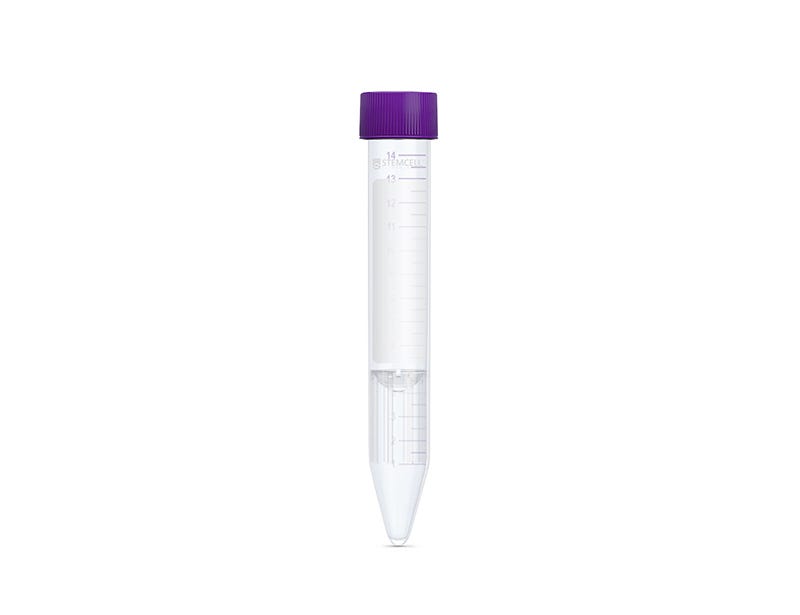
Try SepMate™-15 (IVD) tubes for density gradient centrifugation in your IVD applications. Request a Sample

SepMate™-15 (IVD)

Tube for density gradient centrifugation for in vitro diagnostic (IVD) applications

From: 528 USD
Catalog #
(Select a product)
Tube for density gradient centrifugation for in vitro diagnostic (IVD) applications
Add to Wish List

Product Advantages


  • Eliminates the need for carefully layering blood over the density gradient medium (e.g. Lymphoprep™, etc.)

  • Reduces total centrifuge time to 10 minutes with the brake on for fresh samples

  • Allows fast and easy harvesting of the isolated mononuclear cells by simply pouring off the supernatant

  • Can be combined with RosetteSep™ enrichment cocktails to isolate specific cell types in just 30 minutes

What's Included

  • SepMate™-15 (IVD), 100 Tubes (Catalog #85415)
    • Dispenser box containing 4 bags, 25 Tubes/Bag
  • SepMate™-15 (IVD), 500 Tubes (Catalog #85420)
    • Dispenser box containing 4 bags, 25 Tubes/Bag (Catalog #85415) x 5
Products for Your Protocol

What Our Scientist Says

Traditional isolation of PBMCs requires careful layering of blood onto density gradient media prior to centrifugation. We developed SepMate™ to simplify this process, so anyone can isolate PBMCs with a simple pour while maintaining consistency across samples.

Peter MorinTechnical Scientist
Peter Morin, Technical Scientist

Overview

Simplify peripheral blood mononuclear cell (PBMC) isolation by incorporating SepMate™ into your density gradient centrifugation step.

SepMate™ tubes contain an insert that creates a barrier between the density gradient medium and blood, thus eliminating the need for careful blood layering and allowing mononuclear cells to be easily harvested with a simple pour. This product can be used with RosetteSep™ to isolate specific immune cell subsets.

SepMate™-15 is designed for processing 0.5 to 5 mL of sample.

SepMate™ is manufactured under cGMP and is available as an in vitro diagnostic (IVD) device in Australia, Canada, the European Union (EU), South Korea, Switzerland, Turkey, the United Kingdom (UK), and the United States. In China, SepMate™ is considered general laboratory equipment by the National Medical Products Administration (NMPA). The end user is responsible for determining whether the product is suitable for their specific application.

Browse our Frequently Asked Questions (FAQs) on SepMate™.
Contains
Polypropylene tube containing an insert
Subtype
Centrifugation Tubes
Cell Type
B Cells, Dendritic Cells, Monocytes, Mononuclear Cells, NK Cells, T Cells, T Cells, CD4+, T Cells, CD8+, T Cells, Other Subsets, T Cells, Regulatory
Species
Human
Sample Source
Bone Marrow, Whole Blood
Selection Method
Negative
Application
Cell Isolation, In Vitro Diagnostic
Brand
SepMate
Area of Interest
Chimerism, HLA, Immunology

Data Figures

PBMC recovery from fresh whole blood using SepMate™-50 versus standard density gradient centrifugation. Graph also shows PBMC recovery from a 48 hour-old sample using SepMate™. n in each group = 7

Figure 1. Recovery of mononuclear cells (MNCs) from peripheral blood using SepMate™-50 versus standard density gradient centrifiguation.

Recovery of MNCs from fresh and 48-hour post blood draw enriched by density gradient centrifugation with SepMate™ (purple) or without (grey). There was no significant difference in the recovery of MNCS with and without SepMate™.

PBMC recovery from fresh whole blood using SepMate™-50 versus standard density gradient centrifugation. Graph also shows PBMC recovery from a 48 hour-old sample using SepMate™. n in each group = 7

Figure 2. Human CD4+ T Cell Isolation using SepMate™-50 and RosetteSep™ Human CD4+ T Cell Enrichment Cocktail

Protocols and Documentation

Find supporting information and directions for use in the Product Information Sheet or explore additional protocols below.

Document Type
Product Name
Catalog #
Lot #
Language
Catalog #
85415, 85420
Lot #
All
Language
MULTI

Resources and Publications

Publications (39)

Anti-inflammatory and phosphorylation effects of CFTR modulator triple therapy in cystic fibrosis. H. Selvadurai et al. iScience 2026 Sep

Abstract

CFTR modulators like elexacaftor-tezacaftor-ivacaftor (ETI) improve morbidity in cystic fibrosis (CF), but their systemic effects on young children are not yet clear. We hypothesize that ETI has anti-inflammatory effects and reverse disease-associated molecular signatures in children with CF. This exploratory pilot study evaluates the cellular mechanisms of ETI on peripheral immune cells in children (<12 years) with CF using a multi-omics approach. Seventeen children with CF (median age 8.7 years, 26% female) and 12 controls (median age 9.6 years, 42% female) were included for blood RNA-sequencing, proteomics and phosphoproteomics. Baseline pathway enrichment analysis revealed systemic inflammation, transmembrane transporter deficiencies, reduced protein kinase, and GTPase activity. Three months post-ETI, anti-inflammatory effects, epigenetic modulation, and increased protein kinase activity were observed, indicating partial reversal of cellular abnormalities. ETI modified systemic inflammatory, epigenetic, and phosphorylation pathways in young children with CF, offering insights into CF pathology and potential biomarkers for treatment monitoring.
ZBP1 activated by mitochondrial damage binds to STAT3 to suppress Legumain production and exacerbate macrophage inflammation in Klebsiella pneumoniae-induced sepsis. L. Deng et al. Military Medical Research 2026 Jul

Abstract

BACKGROUND: Severe bacterial sepsis caused by Klebsiella pneumoniae (KP) is characterized by dysregulated inflammation, multiorgan injury, and high mortality, yet the key molecular drivers of this process remain incompletely understood. This study aimed to elucidate how the Z-DNA binding protein 1 (ZBP1) regulates inflammatory injury during KP-induced sepsis and to identify potential therapeutic targets with translational relevance. METHODS: To investigate the role of macrophage ZBP1 in sepsis, we combined transcriptomic datasets from human sepsis cohorts and murine sepsis and KP-infection models with single-cell RNA sequencing of infected tissues. We further established both global and myeloid-specific Zbp1 knockout (Zbp1 fl/fl Lyz2-Cre +/- ) mice, as well as myeloid-specific Lgmn (encoded Legumain) knockout (Lgmn fl/fl Lyz2-Cre +/- , Lgmn CKO ) mice, to delineate the macrophage-dependent mechanisms of immune regulation. In addition, macrophage-targeted adeno-associated virus 9 (AAV9) vectors driven by the F4/80 promoter were used to overexpress Lgmn in vivo. Flow cytometry, immunofluorescence, and survival analyses were performed to evaluate systemic inflammation, organ injury, and sepsis severity. The effect of recombinant LGMN supplementation on macrophage activation and barrier restoration was also assessed. RESULTS: ZBP1 activation was driven by both type I interferon (IFN-I) signaling and mitochondrial damage. Mechanistically, ZBP1 directly interacted with signal transducer and activator of transcription 3 (STAT3), suppressed its phosphorylation and nuclear translocation, and consequently inhibited transcription of Lgmn, a gene associated with anti-inflammatory macrophage polarization and tissue repair. Genetic and myeloid-specific deletion of Zbp1 resulted in reduced proinflammatory cytokine production and improved survival in both KP- and cecal ligation and puncture (CLP)-induced sepsis models. In contrast, Lgmn CKO aggravated systemic inflammation, organ injury, and barrier dysfunction, whereas macrophage-targeted AAV9-mediated Lgmn overexpression or recombinant LGMN supplementation alleviated macrophage inflammation, restored epithelial function, and improved survival. CONCLUSION: These findings reveal a previously unrecognized ZBP1-STAT3-LGMN signaling axis that contributes to immune and inflammatory dysregulation in KP-induced sepsis and suggest that targeting ZBP1 or restoring LGMN activity may represent a promising therapeutic strategy for severe bacterial infections.
Genomics in containment: BSL-4-compatible workflows enable high-resolution genomic and transcriptomic analyses of Risk Group 4 viruses. L. Peng et al. iScience 2026 Aug

Abstract

Genomic research on high-consequence Risk Group 4 (RG4) viruses is significantly hindered by the stringent biosafety level 4 (BSL-4) containment requirements, because virus inactivation prior to removal from containment often compromises nucleic acid integrity. As a focused solution to retain nucleic acid integrity as well as safety compliance, we developed and validated a comprehensive suite of optimized workflows compatible with BSL-4 containment and next-generation sequencing applications. We systematically assessed inactivation, homogenization, and RNA extraction methods to establish robust bulk RNA sequencing workflows for diverse sample types. We also adapted state-of-the-art single-cell RNA sequencing (scRNA-seq) by integrating inactivation steps without compromising data quality. To demonstrate feasibility, we conducted scRNA-seq analysis on cells exposed to Lassa virus. Additionally, we optimized viral genome enrichment strategies for high-depth sequencing of multiple RG4 viruses. These validated workflows enable safe, reproducible, and high-resolution genomic analyses of RG4 pathogens, significantly expanding the experimental toolkit for BSL-4 research.
Try SepMate™-15 (IVD) tubes for density gradient centrifugation in your IVD applications. Request a Sample