ImmunoCult™ Dendritic Cell Culture Kit

Complete kit for differentiation of human monocytes into dendritic cells
ImmunoCult™ Dendritic Cell Culture Kit

Complete kit for differentiation of human monocytes into dendritic cells

From: 788 USD
Catalog #
(Select a product)
Complete kit for differentiation of human monocytes into dendritic cells
Add to Wish List

Product Advantages


  • Animal component-free and serum-free medium

  • No need to supplement the medium with serum

  • Optimized for differentiation of CD14+ monocytes into immature and subsequently mature DCs

  • High yields of mature DCs with the desired phenotype

  • Mature DCs are functional, produce the pro-inflammatory cytokine IL-12, and induce T cell proliferation

What's Included

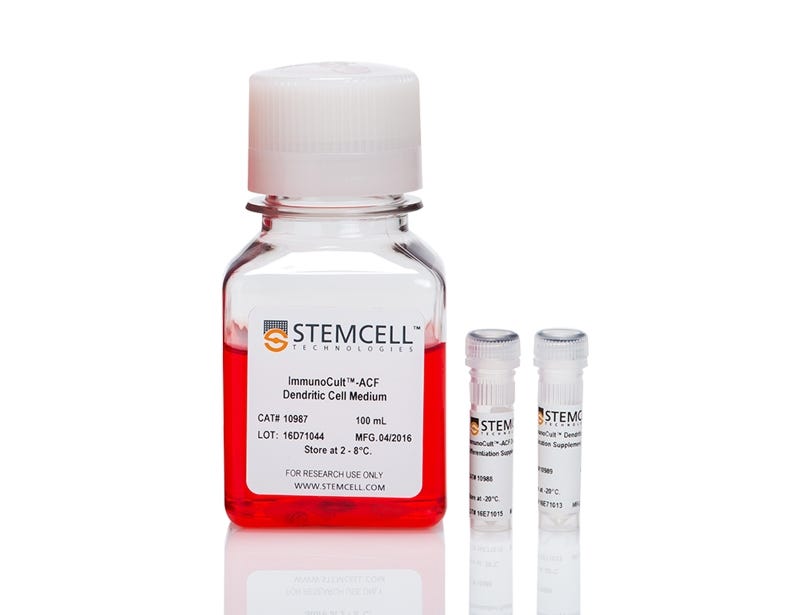
• ImmunoCult™-ACF Dendritic Cell Medium, 100 mL (Catalog #10987)
• ImmunoCult™-ACF Dendritic Cell Differentiation Supplement, 1 mL (Catalog #10988)
• ImmunoCult™ Dendritic Cell Maturation Supplement, 0.5 mL (Catalog #10989)

Overview

Culture and differentiate human monocytes into dendritic cells (DCs) using the animal component-free (ACF) ImmunoCult™ Dendritic Cell Culture Kit.

For your convenience, the kit includes all the necessary components for you to generate active mature DCs from human monocytes in 7 days:

• ImmunoCult™-ACF Dendritic Cell Medium for the in vitro culture and differentiation of human monocytes into DCs.
• ImmunoCult™-ACF Dendritic Cell Differentiation Supplement to support the differentiation of immature DCs from human monocytes.
• ImmunoCult™ Dendritic Cell Maturation Supplement to support the maturation of immature human DCs.

For more information on protocols for culture and differentiation using ImmunoCult™ Dendritic Cell Culture Kit, please explore the Product Information Sheet (PIS).
Contains
ImmunoCult™-ACF Dendritic Cell Medium contains only recombinant proteins and synthetic components
Subtype
Specialized Media, Supplements
Cell Type
Dendritic Cells, Monocytes
Species
Human
Application
Cell Culture, Differentiation
Brand
ImmunoCult
Area of Interest
Drug Discovery and Toxicity Testing, Immunology
Formulation Category
Animal Component-Free, Serum-Free

Data Figures

Start: 54% CD4+CXCR3-CCR6+ T Cells

Figure 1. Protocol Diagram.

Mature DCs were generated by culturing EasySep™ isolated monocytes at 1 x 10⁶ cells/mL in ImmunoCult™-ACF Dendritic Cell Medium (Catalog #10987) with added ImmunoCult™-ACF Dendritic Cell Differentiation Supplement (Catalog #10988). At day 3, the medium with differentiation supplement was replaced and cells were incubated for 2 more days. At day 5, without changing the medium, ImmunoCult™ Dendritic Cell Maturation Supplement (Catalog #10989) was added to the culture. At day 7, fully mature DCs were harvested for downstream applications.

Start: 54% CD4+CXCR3-CCR6+ T Cells

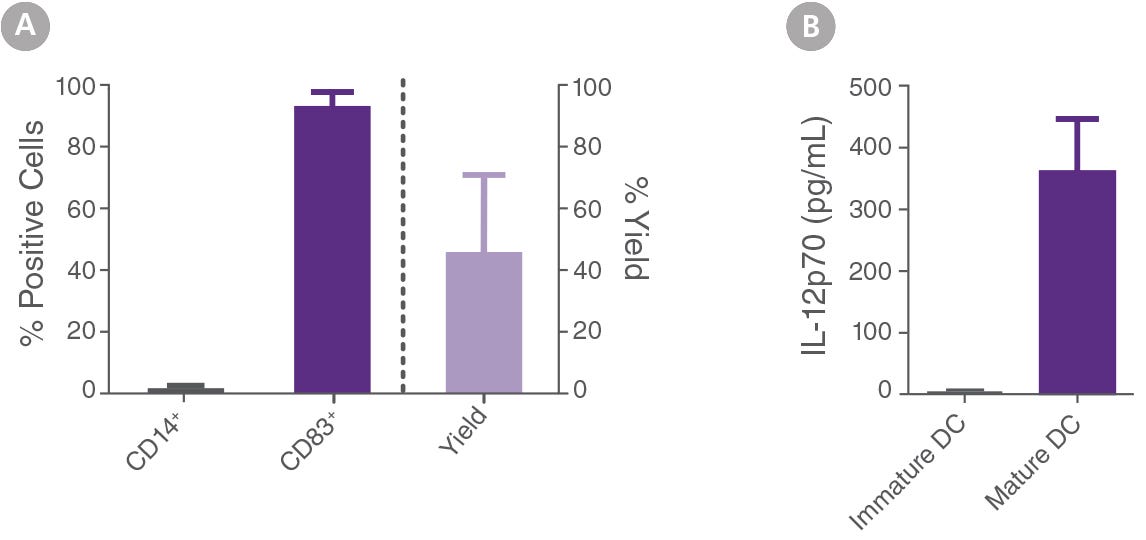
Figure 2. Mature DCs generated with ImmunoCult™-ACF Dendritic Cell Medium with Supplements show desired phenotype.

EasySep™ isolated monocytes were cultured and differentiated into mature DCs as described in Figure 1. (A) The percentage of CD14 and CD83 expression in cells at day 7 (mature DCs) was determined by flow cytometry. At day 7, a total of 93 ± 5% of the cells expressed the mature DC marker CD83 and only 1 ± 1% of cells still expressed the monocyte marker CD14 (mean ± SD, n=39). Yield of mature DCs was determined by count of total viable cells at day 7 relative to the count of viable monocytes used for initial culture at day 0. At day 7, the yield of viable mature DCs corresponded to 45 ± 25% (mean ± SD, n=39). (B) Immature DCs were cultured as described in Figure 1. At day 5, cells were cultured with maturation supplement for 2 days (mature DCs) or without maturation supplement (immature DCs). Supernatant was collected at day 7 and IL-12p70 levels were determined by ELISA. Concentrations of IL-12p70 in supernatant of mature and immature DCs were 361 ± 81 and 5 ± 2 pg/mL, respectively (mean ± SEM, n=27).

Start: 54% CD4+CXCR3-CCR6+ T Cells

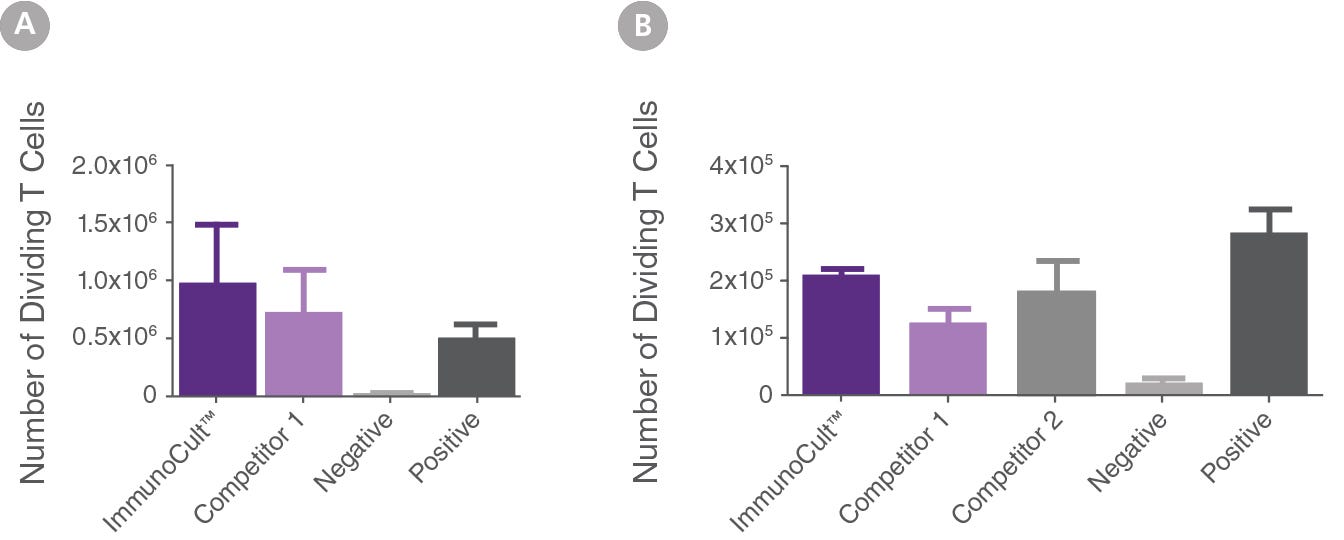
Figure 3. Mature DCs generated with ImmunoCult™-ACF Dendritic Cell Medium and Supplements induce T cell proliferation.

Mature DCs generated with ImmunoCult™-ACF Dendritic Cell Medium and Supplements (ImmunoCult) or other serum-free competitor media (competitor 1 and 2) and corresponding supplements when applicable (competitor 2), were cultured in ImmunoCult™-XF T Cell Expansion Medium with 1 x 10⁵ CFSE labeled (A) allogeneic CD3+ T cells (MLR assay) or (B) autologous CD8+ T cells (antigen-specific T cell response). (A) Cells were cultured at a DC:T cell ratio of 1:25. (B) Prior to culture with T cells, immature DCs were loaded with HLA Class I peptides derived from the human Cytomegalovirus, Epstein-Barr Virus and Influenza Virus (CEF peptide pool) and stimulated with maturation supplement for 2 days. Cells were cultured at a DC:T cell ratio of 1:4 or 1:10. (A,B) CFSE labeled T cells were incubated in media alone (negative control) or with ImmunoCult™ Human CD3/CD28 T Cell Activator (positive control). After 5-7 days in culture the number of dividing T cells ( CD3+CFSElo) was assessed by flow cytometry (mean ± SEM) (A) n=5 (B) n=4 (competitor 1 and 2, n=3). Mature DCs generated in ImmunoCult™-ACF Dendritic Cell Medium induced proliferation of allogeneic and antigen-specific T cells similar to DCs generated in either competitor media. Competitors 1 and 2, include in no particular order, CellGro DC Medium (CellGenix) and PromoCell DC Generation Medium DXF.

Protocols and Documentation

Find supporting information and directions for use in the Product Information Sheet or explore additional protocols below.

Document Type
Product Name
Catalog #
Lot #
Language
Catalog #
10985
Lot #
All
Language
English
Document Type
Safety Data Sheet 1
Catalog #
10985
Lot #
All
Language
English
Document Type
Safety Data Sheet 2
Catalog #
10985
Lot #
All
Language
English
Document Type
Safety Data Sheet 3
Catalog #
10985
Lot #
All
Language
English

Resources and Publications

Publications (5)

Tregs transduced with a Ro60-reactive TCR have increased immunosuppressive functions in Sjögren's disease. Z. Sherman Lim et al. iScience 2026 Oct

Abstract

Sjögren's disease (SjD) is a T cell-driven autoimmune condition strongly associated with the HLA-DRB1∗03:01 allele and autoantibodies against the Ro60 protein. Previous studies have identified deficiencies in regulatory T cells (Treg) in patients, indicating a breakdown in immune tolerance. Current treatments remain limited to symptomatic relief or broad immunosuppression, without addressing the underlying immune dysregulation. In this study, we present the first preclinical evidence supporting a TCR-engineered Treg (TCR-Treg) therapy specifically targeting SjD. We designed a TCR-Treg that recognizes a dominant epitope of the Ro60 antigen (Ro60369-383) presented by HLA-DRB1∗03:01 and demonstrate that these cells can selectively suppress autoreactive T cells more effectively than polyclonal Treg. These findings underscore the pathogenic significance of the Ro-HLA-DRB1∗03:01 axis and provide proof-of-concept for a targeted, antigen-specific Treg therapy. This approach offers a promising strategy to restore immune tolerance and represents a potential disease-modifying treatment for genetically defined subsets of patients with SjD.
Nonclinical safety assessment of SBT777101, a CAR-engineered regulatory T cell therapy for autoimmune diseases. H. Lebrec et al. Toxicological sciences : an official journal of the Society of Toxicology 2026 Oct

Abstract

Chimeric antigen receptor (CAR)-regulatory T cell (Treg) therapies represent a promising approach for autoimmune diseases, but their nonclinical safety assessment remains challenging due to antigen-, disease-, and species-specific pharmacology that limits the relevance of conventional animal models. SBT777101, a CAR-Treg therapy targeting citrullinated proteins associated with rheumatoid arthritis and hidradenitis suppurativa, was evaluated using a nonclinical strategy centered on in vitro and ex vivo New Approach Methodologies (NAMs) and in vivo studies benchmarked against untransduced polyclonal Tregs, which are manufactured identically but lack the CAR and have an established clinical safety record, complemented by immunodeficient mouse studies. We hypothesized that CAR engineering would not destabilize the Treg phenotype or introduce new toxicological liabilities relative to polyclonal Tregs. SBT777101 maintained phenotypic stability under repeated stimulation and proinflammatory conditions, produced minimal proinflammatory cytokines following activation, and demonstrated immunomodulatory activity comparable to untransduced Tregs. Tissue cross-reactivity and primary cell studies identified limited membrane-associated binding, no evidence of CAR-mediated cytotoxicity or activation in normal human tissues, and no off-target binding by broad protein array screening. Immunosuppressive activity toward natural killer and CD8+ T cell responses was limited and comparable to polyclonal Tregs. Lentiviral integration site analyses demonstrated polyclonal integration profiles without evidence of transformation or abnormal growth in a cytokine- and activation-independent growth assay. This study establishes a combined in vivo and NAM-based nonclinical safety framework for CAR-Treg therapies and demonstrates that CAR engineering of SBT777101 does not introduce new safety liabilities relative to unmodified polyclonal Tregs. These findings supported progression of SBT777101 into Phase 1 clinical trials and offer a generalizable approach for evaluating the safety of future CAR-Treg therapeutics.
Induced Pluripotent Stem Cell-Derived Dendritic Cells Provide a Reliable In Vitro Platform for Functional Screening of Immunoregulatory Probiotics Y-L. Chiang et al. International Journal of Molecular Sciences 2025 Dec

Abstract

The immunoregulatory effects of probiotics have been widely studied, particularly in maintaining immune balance. Conventional in vitro functional screening of probiotics relies on fresh donor-derived primary immune cells, which often exhibit significant inter-individual and temporal variability, limiting reproducibility and interpretation. As an alternative, human-induced pluripotent stem cell (iPSC)-derived dendritic cells were co-cultured with five probiotic strains in the current study to evaluate their immunomodulatory interactions. To assess whether cytokines produced by probiotic-stimulated dendritic cells can influence T cell differentiation, human CD4+ T cells were exposed to the conditioned medium derived from co-cultures. Enzyme-linked immunosorbent assay results demonstrated that iPSC-derived dendritic cells secreted cytokines at distinct concentrations in response to different probiotic strains, suggesting that these cells can distinguish between different microbial stimuli, and supporting their use in functional probiotic screening. Among the five strains tested, Lactiplantibacillus plantarum LPA-56, Limosilactobacillus reuteri RU-23, and Lactobacillus fermentum Fem-99 induced cytokine production levels that promoted the differentiation of the human CD4+ T cells into regulatory T cells. These findings demonstrate that iPSC-derived dendritic cells have immunomodulatory potential, are reliable for in vitro screening of probiotics, and offer a promising strategy for selecting potent immunoregulatory probiotic candidates.