EasySep™ Human Neutrophil Isolation Kit

Immunomagnetic negative selection of untouched human neutrophils
EasySep™ Human Neutrophil Isolation Kit

Immunomagnetic negative selection of untouched human neutrophils

From: 1,277 USD
Catalog #
(Select a product)
Immunomagnetic negative selection of untouched human neutrophils
Add to Wish List

Product Advantages


  • Fast, easy-to-use and column-free

  • Up to 99% purity

  • Untouched, viable cells

What's Included

  • EasySep™ Human Neutrophil Isolation Kit (Catalog #17957)
    • EasySep™ Human Neutrophil Isolation Cocktail, 1 mL
    • EasySep™ Dextran RapidSpheres™, 1 mL
  • RoboSep™ Human Neutrophil Isolation Kit with Filter Tips (Catalog #17957RF)
    • EasySep™ Human Neutrophil Isolation Cocktail, 1 mL
    • EasySep™ Dextran RapidSpheres™, 1 mL
    • RoboSep™ Buffer (Catalog #20104)
    • RoboSep™ Filter Tips (Catalog #20125)
Products for Your Protocol
To see all required products for your protocol, please consult the Protocols and Documentation.

Overview

Easily and efficiently isolate highly purified human neutrophils from fresh human peripheral blood leukocyte samples by immunomagnetic negative selection, with the EasySep™ Human Neutrophil Isolation Kit. Widely used in published research for more than 20 years, EasySep™ combines the specificity of monoclonal antibodies with the simplicity of a column-free magnetic system.

In this EasySep™ negative selection procedure, unwanted cells are labeled with antibody complexes and magnetic particles. The magnetically labeled cells are then separated from the untouched desired neutrophils by using an EasySep™ magnet and simply pouring or pipetting the cells into a new tube. Following magnetic cell isolation in as little as 14 minutes, the desired neutrophils are ready for downstream applications such as flow cytometry, culture, or DNA/RNA extraction. The isolation kit is compatible with cells prepared using HetaSep™ (Catalog #07906) sedimentation or red blood cell lysis.


This product replaces the EasySep™ Human Neutrophil Enrichment Kit (Catalog #19257), for even faster cell isolations.

Learn more about how immunomagnetic EasySep™ technology works or how to fully automate immunomagnetic cell isolation with RoboSep™. Alternatively, choose ready-to-use, ethically sourced, primary Human Peripheral Blood Neutrophils, Frozen isolated with EasySep™ Human Neutrophil Isolation Kit. Explore additional products optimized for your workflow, including culture media, supplements, antibodies, and more.
Magnet Compatibility
• EasySep™ Magnet (Catalog #18000)
• “The Big Easy” EasySep™ Magnet (Catalog #18001)
• EasyEights™ EasySep™ Magnet (Catalog #18103)
• EasyPlate™ EasySep™ Magnet (Catalog #18102)
• RoboSep™-S (Catalog #21000)
Subtype
Cell Isolation Kits
Cell Type
Granulocytes and Subsets
Species
Human
Sample Source
PMNC, Whole Blood
Selection Method
Negative
Application
Cell Isolation
Brand
EasySep, RoboSep
Area of Interest
Immunology

Data Figures

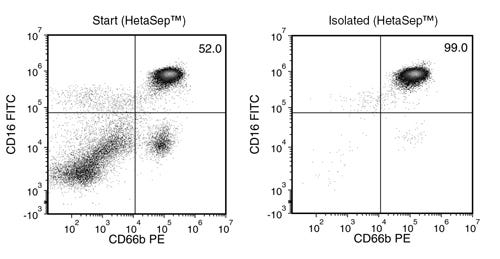
Figure 1. Typical EasySep™ Human Neutrophil Isolation Profile

Starting with whole blood prepared using HetaSep™ or Lymphoprep™ with RBC lysis, the neutrophil content (CD45+CD16+CD66b+) of the isolated fraction typically ranges from 98.7 ± 0.9% (mean ± SD). In the above example, the purities of the start and final isolated fractions are 52.0% and 99.0%, respectively.

Protocols and Documentation

Find supporting information and directions for use in the Product Information Sheet or explore additional protocols below.

Document Type
Product Name
Catalog #
Lot #
Language
Catalog #
17957RF
Lot #
All
Language
English
Catalog #
17957
Lot #
All
Language
English
Document Type
Safety Data Sheet 1
Catalog #
17957RF
Lot #
All
Language
English
Document Type
Safety Data Sheet 2
Catalog #
17957RF
Lot #
All
Language
English
Document Type
Safety Data Sheet 3
Catalog #
17957RF
Lot #
All
Language
English
Document Type
Safety Data Sheet 1
Catalog #
17957
Lot #
All
Language
English
Document Type
Safety Data Sheet 2
Catalog #
17957
Lot #
All
Language
English

Applications

This product is designed for use in the following research area(s) as part of the highlighted workflow stage(s). Explore these workflows to learn more about the other products we offer to support each research area.

Resources and Publications

Publications (16)

Outbreaks of fluconazole-resistant Candida parapsilosis are driven by low-biofilm-producing isolates that emerge under host selection. F. Daneshnia et al. PLoS biology 2026 Sep

Abstract

Candida parapsilosis is a major human fungal pathogen, with recent global outbreaks driven by fluconazole-resistant (FLCR-Cp) isolates that are difficult to eradicate and associated with poor clinical outcomes. However, the microbial traits enabling persistence of these outbreak lineages remain poorly defined. Here, we show that FLCR-Cp isolates responsible for prolonged, multi-country outbreaks consistently exhibit a striking low-biofilm-producing (LBP) phenotype. Contrary to the prevailing view that robust biofilm formation promotes persistence, LBP strains displayed enhanced stress tolerance, increased cell wall masking, and reduced immune recognition. These traits conferred resistance to neutrophil and macrophage killing and enhanced survival in immune cell-rich organs during systemic infection. Genome-wide transcriptomic profiling revealed extensive metabolic and regulatory rewiring in LBP strains. Whole-genome sequencing (WGS) of a global isolate collection further demonstrated that the LBP phenotype has emerged independently multiple times, supporting convergent evolution under host selection. Functional genomic analyses suggest that biofilm attenuation arises through multigenic changes, and disruption of key biofilm-associated transcriptional regulators enhanced fitness during immune interactions. Together, our findings overturn the assumption that robust biofilm formation drives outbreak persistence and instead identify biofilm attenuation as an adaptive tradeoff that promotes immune evasion and long-term survival. These results redefine our understanding of C. parapsilosis adaptation during healthcare-associated outbreaks and shift attention toward host-driven evolutionary processes than environmental persistence alone.
Neutrophil swarm formation on large targets. C. Wine et al. iScience 2026 Oct

Abstract

Neutrophils are smaller in size than most fungal hyphae. Yet, neutrophils can engage in collective actions known as swarming, during which they cover the hyphae and block their growth. To understand how neutrophil swarms cover large targets efficiently, we employed particle image velocimetry (PIV). We found that the process is initiated at a small number of sites on the surface of a large target. Radiating from these initial sites, waves of intracellular Ca2+ increase in surrounding neutrophils, and neutrophils start converging toward these sites. Multiple swarms form which later merge and ultimately fully encapsulate the target. Neutrophils from immunocompromised patients after liver transplant or hematopoietic stem cell transplant produce swarms that grow slowly and end up smaller compared with those from healthy donors. In the future, the methods and metrics of neutrophil swarming toward large targets may help diagnose and monitor innate immune impairment in transplant patients.
Neutrophil myeloperoxidase as a functional biomarker for RSV severity: implications for in vitro therapeutic screening. M. Palor et al. Nature communications 2026 Jul

Abstract

Respiratory syncytial virus (RSV) is a leading cause of severe lower respiratory tract infections in infants, yet therapeutics are lacking. The aim of this study was to develop a pre‑clinical model that recapitulates key clinical outcomes in infants with RSV bronchiolitis, such as neutrophil activation and migration into the airways. Peripheral blood neutrophils from infants with severe RSV disease admitted to the Paediatric Intensive Care Unit showed elevated myeloperoxidase (MPO) in children with RSV, compared to age-matched controls. To mechanistically model this response, we established an air-liquid interface (ALI) system incorporating paediatric airway epithelial cells, endothelial cells and neutrophils from adults, to recapitulate the blood-airway barrier. Following RSV infection, with and without treatment with antivirals remdesivir or RSV604, neutrophil migration and activation were assessed using flow cytometry. While both drugs reduced viral load, only RSV604 attenuated MPO expression. This model suggests that MPO could be useful as a readout of therapeutic efficacy. Targeting neutrophil-driven inflammatory pathways may be critical for reducing pathology in infant RSV infection.