
How to Design Your Neural Induction and Differentiation Workflow
Introduction
Neural induction is the first step in the specification of human pluripotent stem cells (hPSCs) to a neuroectodermal fate. In vivo, neural induction is initiated through the disinhibition of TGF-β and BMP signaling that occurs through the action of patterning factors released in the developing embryo1. Induction of cultured human embryonic stem (ES) cells and induced pluripotent stem (iPS) cells to a neural fate involves mimicking these developmental cues in vitro.
This Tech Tip will walk you through practical considerations to help you select the ideal in vitro neural induction workflow to generate neural progenitor cells (NPCs), including medium choice, protocol format, and options for further expansion, cryopreservation, and differentiation of NPCs to downstream neural cell types.
How to Choose a Neural Induction Medium
Selecting between the STEMdiff™ SMADi Neural Induction Kit and STEMdiff™ Neural Induction Medium (NIM) depends on your cell lines, upstream culture conditions, and whether your protocol requires exogenous small-molecule inhibitors. SMADi supplementation is strongly recommended, particularly if you will be further differentiating your NPCs to downstream cell types such as neurons or astrocytes.

Figure 1. Workflow Schematic for the Embryoid Body Protocol
NPCs are generated from hPSCs in 17–19 days using an EB-based workflow. On Day 0, single-cell hPSCs are seeded into Anti-Adherence Rinsing Solution-treated AggreWell™800 plates in STEMdiff™ Neural Induction Medium or STEMdiff™ SMADi Neural Induction Kit supplemented with 10 μM Y-27632 (Day 0 only) to promote single-cell survival and uniform EB formation, monitoring for round, symmetrical EB morphology before being replated on Day 5. On Day 8, neural induction efficiency is evaluated via rosette scoring, targeting a minimum threshold of 75%. On Day 12, neural rosettes containing CNS-type NPCs are selectively harvested using STEMdiff™ Neural Rosette Selection Reagent while avoiding excessive trituration and excluding flat non-NPC outgrowth. Harvested rosettes are resuspended and plated at a 1:1 well replating ratio until the first passage at Day 17–19, at which point neural induction should be validated by assessing the expression of neural markers (PAX6, SOX1, and Nestin) via immunocytochemistry. At this time point NPCs can be harvested using ACCUTASE™ for further differentiation or can be cryopreserved using either STEMdiff™ Neural Progenitor Freezing Medium or CryoStor® CS10. Alternatively, NPCs may be further expanded by seeding at a high seeding density (≥1.25 × 10⁵ cells/cm²) in STEMdiff™ Neural Progenitor Medium to maintain their proliferative state. NPCs = neural progenitor cells; hPSCs = human pluripotent stem cells; EB = embryoid body; CNS = central nervous system.

Figure 2. Workflow Schematic for the Monolayer Protocol
NPCs are generated from hPSCs in 18–21 days using a monolayer-based workflow. On Day 0, single-cell hPSCs are seeded onto Matrigel® or Poly-L-Ornithine/Laminin-coated plates at a density of 2.0-2.5 x 10^5 cells/cm² in STEMdiff™ Neural Induction Medium or STEMdiff™ SMADi Neural Induction Kit supplemented with 10 μM Y-27632 (Day 0 only) to promote cell survival and attachment. Cultures are maintained for 3 passages with daily medium changes, observing for characteristic closely packed, teardrop-shaped cell body morphology and monitoring growth to determine timing of the next passage. On Day 18–21, neural induction should be validated by assessing the expression of neural markers (PAX6, SOX1, and Nestin) via immunocytochemistry. At this time point NPCs can be harvested using ACCUTASE™ for further differentiation or cryopreserved using either STEMdiff™ Neural Progenitor Freezing Medium or CryoStor® CS10. Alternatively, NPCs may be further expanded by replating into STEMdiff™ Neural Progenitor Medium at high seeding density (≥1.25 × 10⁵ cells/cm²) to preserve their proliferative, progenitor state. NPCs = neural progenitor cells; hPSCs = human pluripotent stem cells.
How to Choose a Neural Induction Protocol Format: Embryoid Body vs. Monolayer Protocols
Neural induction of hPSCs may be achieved using either an embryoid body (EB) or monolayer culture format, both of which are outlined in the Technical Manual for Generation and Culture of Neural Progenitor Cells Using the STEMdiff™ Neural System (Document #10000005588). Both protocol options have advantages, and either (or both) may be suitable for your research. Please refer to the table below for key considerations:
Typically results in less variability between cell lines
Typically results in less variability between replicates from the same cell line
Day 8 Checkpoint: Visual inspection of rosette formation
Compatible with hPSCs cultured in TeSR™-E8™ (SMADi highly recommended)
Compatible with hPSCs cultured in TeSR™-E8™ (SMADi highly recommended)
STEMdiff™ Midbrain Neuron Differentiation Kit (Catalog #100-0038) and STEMdiff™ Midbrain Neuron Maturation Kit (Catalog #100-0041)
STEMdiff™ Astrocyte Differentiation Kit (Catalog #100-0013) and STEMdiff™ Astrocyte Maturation Kit (Catalog #100-0016)
BrainPhys™ hPSC Neuron Kit (Catalog #05795)
- May be combined with additional patterning factors as desired to customize your neuronal differentiation
How to Assess the Efficiency of Neural Induction: hPSC-Derived NPC Characterization
After completing the neural induction protocol, it is important to establish that the induction was successful by characterizing your resulting NPCs. Although NPC morphology can provide information about culture health, it is not a reliable method for confirming neural induction and purity. To assess the efficiency of neural induction, immunocytochemistry may be performed for the following markers to determine the percentage of cells expressing each:
*The % expression levels noted in this table are expected with conventional use of the STEMdiff™ SMADi Neural Induction Kit.
It is recommended to perform staining for at least two of the three neural markers listed above (e.g. PAX6 and SOX1, PAX6 and Nestin, or SOX1 and Nestin). Nestin should not be used on its own to evaluate induction efficiency because it may also be expressed by neural crest cells, the most common non-NPC cell type found in neural induction cultures.
For information about assessing neural/ectodermal marker expression by flow cytometry, please refer to the following Tech Tip: The STEMdiff™ Trilineage Differentiation Kit: Assessing Differentiation to Three Germ Lineages.
How to Increase NPC Yield
After neural induction, you may further maintain and expand your NPCs in STEMdiff™ Neural Progenitor Medium (NPM) for at least 10 passages with good marker expression and minimal spontaneous neuronal differentiation. NPCs will expand 3- to 5-fold per passage.
Important considerations for NPC expansion:
- If you will be performing downstream differentiation to neurons, we recommend limiting the number of NPC passages in STEMdiff™ NPM to less than five to promote the best neuronal differentiation efficiency. This is not to say that higher passage numbers won't work, but if poor efficiency is observed with high-passage NPCs, a 'younger' batch of NPCs may be worth trying.
- Periodically recharacterize neural marker expression (PAX6, SOX1, Nestin) if multiple passages have been performed before proceeding to downstream differentiation or assays.
- Ensure that at each passage, cells are seeded at the high density recommended in the manual (e.g. at least
1.25 x 10⁵ cells/cm2). High densities are critical to maintain NPCs in a proliferative state and prevent spontaneous differentiation from occurring. - If you observe poor viability after passaging, 10 μM ROCK inhibitor Y-27632 may be included in the medium during the plating step.
How to Bank NPCs: NPC Cryopreservation and Thawing
Banking your NPCs at a midpoint in your experimental protocol offers flexibility and allows you to standardize your downstream experiments by starting with the same initial NPC population. After neural induction, NPCs may be cryopreserved using either STEMdiff™ Neural Progenitor Freezing Medium or CryoStor® CS10 following the instructions outlined in section 6.3 of the Technical Manual (Document #10000005588).
Important considerations for NPC thawing:
- If thawing for immediate use in a downstream application:
- Cryopreserved NPCs should be thawed into STEMdiff™ NPM. Allow the cells to recover for one day prior to changing to the desired downstream medium.
- Seeding density upon thawing may need to be optimized to yield the ideal density for the application.
- If thawing for subsequent NPC expansion:
- Cryopreserved NPCs should be thawed into STEMdiff™ NPM and maintained until they are ready to be passaged (typically 5 - 7 days).
- Suggested seeding density upon thawing is 200,000 live cells/cm2.
- Recharacterize neural marker expression (PAX6, SOX1, Nestin) after thawing.
- Avoid repeated freezing and thawing of the same batch of cells. Try to bank NPCs at relatively early passage numbers and use these stocks for experiments.
- Post-thaw viability is typically 70 - 85%. If you observe poor NPC recovery after plating, 10 μM ROCK inhibitor Y-27632 may be included in the medium during the plating step.
How to Plan Downstream NPC Differentiation for Neuronal and Glial Cultures
If you plan to further differentiate your cells into neurons or astrocytes, there are multiple culture workflow options available. Please refer to the following table for details:
Day 12 - 13 of the embryoid body neural induction protocol or immediately following the 18- to 21-day monolayer neural induction protocol, as outlined in the STEMdiff™ Forebrain Neuron Product Information Sheet (Document #10000005464).
Note: It is not recommended to initiate the midbrain neuron differentiation following the full 17- to 19-day embryoid body neural induction.
*The alternative workflow options listed above are compatible with NPCs derived using the STEMdiff™ Neural Induction System, but reduced downstream differentiation efficiency may be observed compared to the recommended workflow.
Ready to Get Started? Choose Your Starting Material
A critical first step in designing your neural induction and differentiation workflow is sourcing reliable, fully characterized starting materials.
To streamline your research, we have a comprehensive portfolio of high-quality, cryopreserved human iPSC lines and human iPSC-derived neural cells. Integrating these ready-to-use options ensures starting material consistency, reduces time spent on early-stage optimization, and allows you to focus on downstream applications and disease modeling sooner.
Ensure Consistency with Quality Starting Cells for Your Research
Selecting an appropriate iPSC line is essential for robust and reproducible neural differentiation. Whether you are establishing a baseline or modeling specific neurological conditions, our cryopreserved human iPSC offerings include:
- Healthy Control Human iPSC Lines: Establish reliable baselines for your experiments with highly characterized healthy control lines. These iPSC lines exhibit validated differentiation capacity and have been rigorously quality-controlled to ensure optimal performance.
- Genome-Edited Human iPSC Lines: Investigate the impact of specific mutations on neural development and function with precision. These ready-to-use, genome-edited isogenic iPSC lines provide a convenient solution for studying specific genetic mechanisms without the need to perform complex and time-consuming in-house CRISPR-Cas9 editing.
- Parkinson’s Disease Human iPSC Lines: Accelerate your neurodegenerative disease modeling with Parkinson's Disease (PD) iPSC lines. These clinically relevant lines enable you to develop physiologically accurate in vitro models of PD to study disease pathology, evaluate neurotoxicity, and screen potential therapeutics.
Bypass Early Differentiation with Human iPSC-Derived Neural Cells and Organoids
Skip the PSC maintenance and neural induction phases of your workflow entirely by starting with assay-ready human iPSC-derived neural cells and organoids.
Available as rigorously quality controlled cryopreserved cells or fresh organoids, these offerings provide highly viable neural populations that are ready to thaw and culture. Whether you are scaling up 2D neural co-cultures or setting up complex 3D organoid models, these pre-differentiated cells deliver the batch-to-batch consistency needed for reliable high-throughput screening and functional neurological assays.
Still unsure which workflow is right for your research? We can help. Contact us by phone or email or use the LiveChat function on this page to discuss your specific needs and applications.
References
Related Neural Induction Protocols


Additional Resources for hPSC-Based Neural Induction and Differentiation
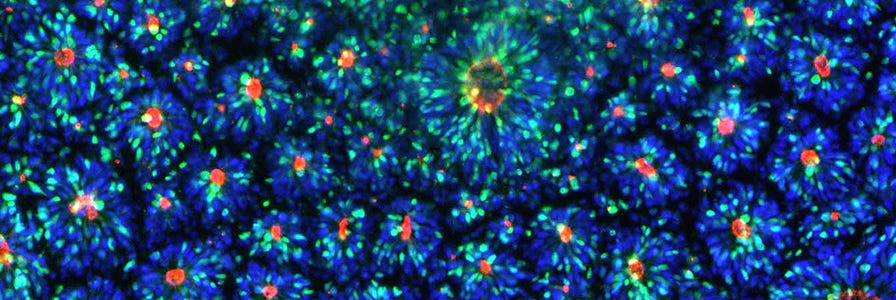
Browse scientific posters, webinars, and technical tips for culturing neural cells from hPSCs.
Related Neural Induction & Differentiation Products
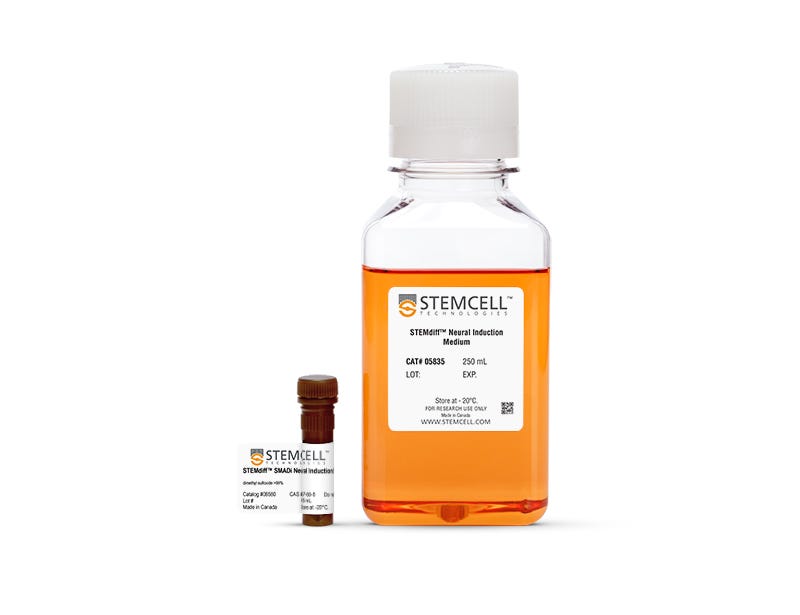
STEMdiff™ SMADi Neural Induction Kit
Serum-free medium kit for highly efficient SMAD inhibition-mediated neural induction of human ES and iPS cells
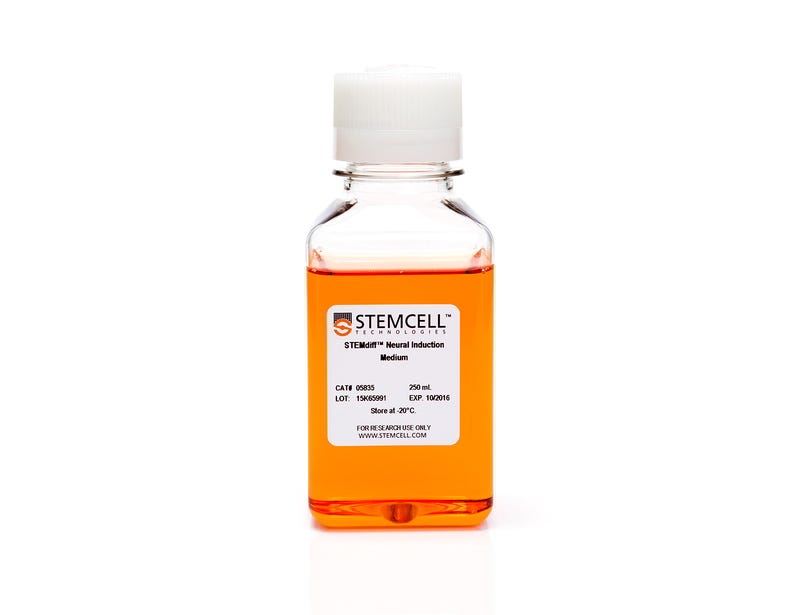
STEMdiff™ Neural Induction Medium
Defined, serum-free medium for neural induction of human ES and iPS cells

STEMdiff™ Neural Rosette Selection Reagent
Enzyme-free reagent for the selective detachment of neural rosettes
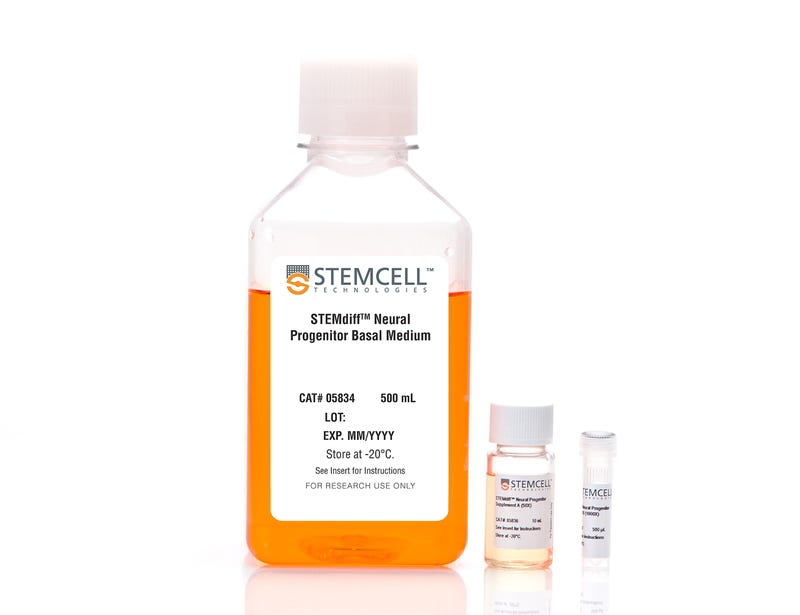
STEMdiff™ Neural Progenitor Medium
Medium for maintenance and expansion of neural progenitor cells derived from human ES and iPS cells
Healthy Control Human iPSC Line, Female, SCTi003-A
Human pluripotent stem cell line, frozen
iPSCdirect™ Healthy Control Human iPSC Line SCTi003-A
Single-use, maintenance-free human induced pluripotent stem cells, frozen
Request Pricing
Thank you for your interest in this product. Please provide us with your contact information and your local representative will contact you with a customized quote. Where appropriate, they can also assist you with a(n):
Estimated delivery time for your area
Product sample or exclusive offer
In-lab demonstration
This site is protected by reCAPTCHA and the Google Privacy Policy and Terms of Service apply.


